Elementary Science
Young children learn science best by living and exploring the world around them. Come and get some great resources, tips, and ideas for teaching elementary-aged children science and discovery.
Elementary Science Teaching Tips & Ideas
How I Teach a Large Family in a Relaxed, Classical Way: Science
Family style learning is a great way to tackle lots of different subjects, including science.
Things to See & Do in South Dakota
Missouri National Recreational River
Missouri National Recreational River offers natural beauty: the forested buff-colored chalkstone bluffs to gently rolling range bottomland; the brilliant white of migrating pelicans to the rich blues of prairie asters; the soaring majesty of resident bald eagles to fleeting glimpses of the wily red fox. It offers an exciting past for your enjoyment and enrichment, from Plains Indian tribes to Lewis and Clark to steamboat captains such as Grant Marsh. Here, you can experience the dynamic character of the river's ever-changing nature, with its islands, shifting sandbars, sloughs, and treacherous, deadly snags. Both the upper 39-mile reach and the lower 59-mile reach along the Nebraska-South Dakota border combine to form one of few sections of this once vast ecosystem along the "Big Muddy" that remains in a relatively natural state.
Jewel Cave National Monument
With more than 129 miles surveyed, Jewel Cave is recognized as the third longest cave in the world. Airflow within its passages indicates a vast area yet to be explored. Cave tours provide opportunities for viewing this pristine cave system and its wide variety of speleothems including stalactites, stalagmites, draperies, frostwork, flowstone, boxwork and hydromagnesite balloons. The cave is an important hibernaculum for several species of bats. Located west of Custer, South Dakota.
Bramble Park Zoo
At the Bramble Park Zoo, located in Watertown, experience over 500 mammals, birds, amphibians, reptiles, fish and invertebrates representing 130 varieties from around the world and those native to South Dakota.
Wind Cave National Park
One of the world's longest and most complex caves and 28,295 acres of mixed-grass prairie, ponderosa pine forest, and associated wildlife are the main features of the park. The cave is well known for its outstanding display of boxwork, an unusual cave formation composed of thin calcite fins resembling honeycombs. The park's mixed grass prairie is one of the few remaining and is home to native wildlife such as bison, elk, pronghorn, mule deer, coyotes, and prairie dogs. Near Hot Springs, South Dakota.
Great Plains Zoo & Delbridge Museum
Explore the animal world at the Great Plains Zoo in Sioux Falls. Offers animal exhibits, special exhibits, and educational programs.
Elementary Science Activities & Experiments
Arbor Day National Poster Contest
Join over 74,000 fifth grade classrooms and home schools across America in the Arbor Day National Poster Contest. The theme chosen will increase your students’ knowledge of how trees produce and conserve energy. The free Activity Guide includes activities to use with fifth grade students to teach the importance of trees in producing and conserving energy. These activities correlate with National Science and Social Study Standards. The Guide also includes all of the information you need for poster contest participation.
ExploraVision
ExploraVision is a competition for all students in grades K-12 attending a school in the U.S., Canada, U.S. Territory or a Department of Defense school. Homeschooled students are eligible to enter. It is designed to encourage students to combine their imagination with their knowledge of science and technology to explore visions of the future. Teams of students select a technology, research how it works and why it was invented, and then project how that technology may change in the future. They must then identify what breakthroughs are required for their vision to become a reality and describe the positive and negative consequences of their technology on society. Winning ideas have focused on things as simple as ballpoint pens and as complex as satellite communications. The student teams write a paper and draw a series of Web page graphics to describe their idea. Regional winners make a Web site and a prototype of their future vision.
Elementary Science Curriculum
Christian Kids Explore Chemistry
These user-friendly, unabashedly Christian, one-year science curriculums for elementary students include teaching lessons, coloring pages, hands-on time, memorization lists, review sheets, creative writing assignments, and a supplemental book list. The Chemistry text is intended for grades 4-8, and includes such hands-on activities as making model atoms, breaking covalent bonds, and making gas expand. It also lists chemistry terms, notations, and rules. The conversational style gives students the basic information they need, making this an ideal first course in life science, especially useful for those following a classical approach.
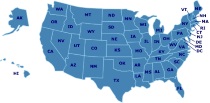
Looking for Another State?
Featured Resources
As an Amazon Associate, we earn from qualifying purchases. We get commissions for purchases made through links on this site.
Explode The Code
Explode The Code provides a sequential, systematic approach to phonics in which students blend sounds to build vocabulary and read words, phrases, sentences, and stories. Frequent review of previously learned concepts helps increase retention. Each workbook in this series contains exercises that incorporate reading, writing, matching and copying. The consistent format of the books helps facilitate independent work. This series includes primers—Get Ready for The Code, Get Set for The Code, and Go...

Kids' Poems (Grades 1)
Regie Routman shares her delightful selection of free verse poems written by first graders that will inspire your second graders to think, I can write poems like this too! Regie provides strategies for using kids' poems as models to guide children to write poems about things they know and care about: learning to skate, disliking asparagus, playing with a best friend, and more. She describes the way she invites children to study the model poem, beginning by asking kids, What do you notice? She sh...

Minds More Awake: The Vison of Charlotte Mason
Anne E. White explores what is known as the Charlotte Mason, based on the educational philosophy of the 19th century British educator. The goal is to set a child on the path to an intentional, purposeful life. White explores both the practical and philosophical understanding the Mason's practices. White includes lots of examples of how to use these ideas in your own homeschooling.

I Learn Better by Teaching Myself/Still Teaching Ourselves
Take a look at how a homeschooling mother learned to trust her children-and herself-to learn in new ways. Tag along on the journey from the elementary years through high school as this book explore the success and freedom of unstructured learning. These books are especially good for anyone wrestling with the question of "how much structure should there be in a homeschool?"

Great Lodges of the National Parks: The Companion Book to the PBS Television Series
Stand amid soaring Douglas fir in the great hall of Glacier Park Lodge or sit in the setting sun and gaze into the Grand Canyon at El Tovar. This beautiful gift book will transport you to the majestic lodges of our national parks to relive the glory of past vacations or plan adventures anew. This book and the PBS television series of the same title (to air in spring 2002) take armchair travelers into these architectural wonders and explore the surrounding natural beauty of our national parks. Lo...